Ohio legalized online sports betting on January 1, 2023, and in the years since, the state has generated approximately $200 million in annual tax revenue from the industry. Now, a group of House Republicans want to shut the whole thing down. The Save Ohio Sports Act, introduced on April 8, 2026, would eliminate online sports betting entirely, restrict wagering to in-person activity at Ohio’s four commercial casinos, and ban some of the most popular bet types on the market. If it passes, it would be one of the most sweeping rollbacks of legal sports betting in the country’s short history of regulated wagering.
What the Bill Would Actually Do
The Save Ohio Sports Act goes far beyond a modest regulatory tweak. The bill’s sponsors — Reps. Riordan McClain (R-Upper Sandusky), Gary Click (R-Vickery), Johnathan Newman (R-Troy), and Kevin Ritter (R-Marietta) — are targeting the full infrastructure of how Ohioans currently bet on sports.
Under the proposed legislation, all online sports betting apps would be prohibited entirely, leaving in-person casino wagering as the only legal option. Beyond the online ban, the bill would eliminate prop bets, parlay bets, and in-game live betting — three of the most heavily used bet types on every major sportsbook platform. College sports wagering would be banned across the board. Individual bets would be capped at $100, with a limit of eight bets per person per 24-hour period. Credit cards could no longer be used to fund betting accounts. Sports betting advertisements during live game broadcasts would be prohibited, and welcome bonuses and promotional offers used to attract new customers would be banned.
One notable carve-out: the bill specifically targets traditional sportsbooks and would not apply to Kalshi, Polymarket, or other federally regulated prediction markets. The distinction between event contract exchanges and traditional sports betting operators creates an interesting gap in the legislation that prediction market platforms would be positioned to exploit if Ohio’s sportsbook market collapses.
The Political Backdrop
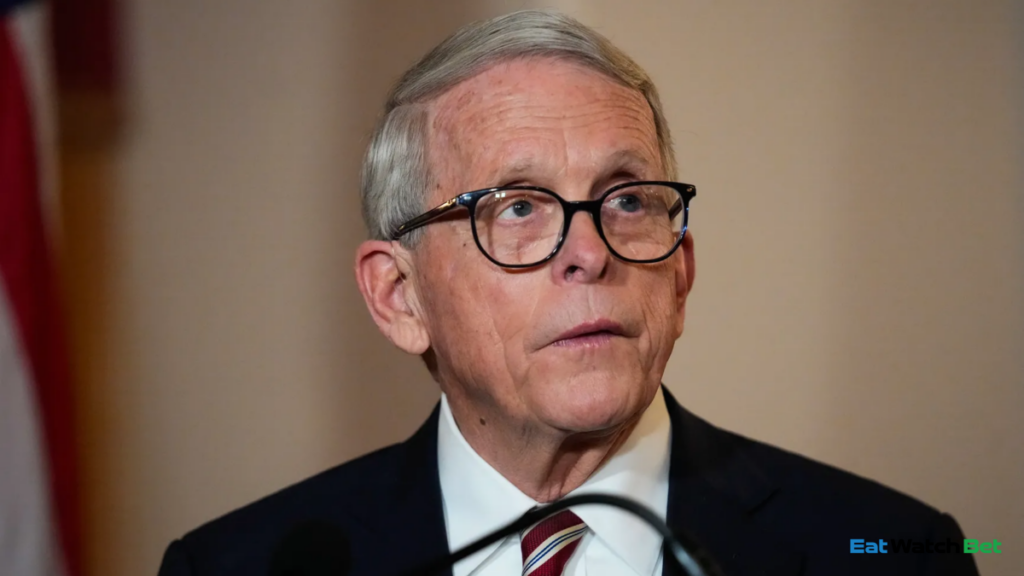
The bill didn’t appear in a vacuum. Ohio Governor Mike DeWine has been one of the most vocal critics of sports betting legalization among sitting governors in states that have already launched. He told the Associated Press in November 2025 that he would sign a repeal bill if lawmakers sent him one — a statement that gave these four House Republicans a clear runway to bring this forward. DeWine has also separately pushed the Ohio Casino Control Commission to eliminate prop bets on their own, independent of any legislative action.
Behind the bill’s faith-based coalition, the Center for Christian Virtue in Columbus is backing the legislation as part of a broader campaign against the expansion of gambling in Ohio. Their support gives the bill a constituency that cuts across traditional political lines and could complicate the industry’s usual lobbying playbook of focusing purely on economic arguments.
The Revenue Argument — and Why It Might Not Be Enough
Ohio’s $200 million in annual sports betting tax revenue is not a small number. Gutting the online market — which generates the overwhelming majority of that total — would create a budget hole that in-person casino wagering, with its inherently smaller volume, could not come close to filling. The industry and its allies will lean hard on that figure during any legislative debate, and they should. Ripping out $200 million in tax revenue to satisfy a moral objection to parlay bets is a genuinely difficult argument to make to a state government managing a real budget.
Ohio is simultaneously considering iGaming legalization — the expansion of online casino games like slots and table games. The two legislative tracks are moving in directly opposite directions, which creates a strange situation where Ohio lawmakers could theoretically be voting to ban online sportsbooks and legalize online blackjack in the same session. That contradiction will be central to the pushback from the gaming industry.
How Bettors Are Reacting
The response online has been swift and consistent: bettors think the bill is extreme. Social media reactions have ranged from exasperation to outright mockery, with comments like “No parlays or props is insane” and “No online bets is probably for the best, but $100 max is insane” circulating widely. The $100 individual bet cap and eight-wager daily limit are drawing particular criticism as patently unworkable restrictions that signal the bill’s sponsors either don’t understand how legal sports betting functions or don’t want it to function at all.
The bill was introduced on April 8 and has not yet passed. It faces what most observers expect to be a difficult legislative path, given the revenue implications and the fact that Ohio simultaneously debating expanding gambling in other forms. But DeWine’s stated willingness to sign a repeal means this is not something the sports betting industry can dismiss. Ohio legalized in 2023 and could have a serious rollback fight on its hands before the decade is out.
The smartest 5 minutes in betting
Get the week's best offers, line moves, and data-driven picks — straight to your inbox. No spam, unsubscribe anytime.
Join 240,000+ subscribers. 21+ only.